
Originally published in Parrots magazine, April 2006, issue #99 in my monthly column The Holistic Parrot
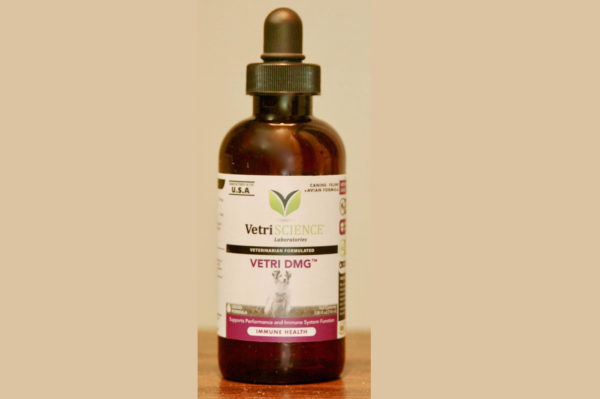
When feeding parrots a balance of foods that provides balanced nutrition, supplements are not needed. DMG is one of the few supplements I use and suggest avian caregivers use in very specific situations.
DMG, A Nutrient Breakthrough
From wild bird rescue to enhancing wellness in companion parrots, DMG has been documented as producing amazing results. One wildlife rehabilitation facility reported a significant decrease in the length of time needed for recovery and rehabilitation before release back into the wild. This center has also recorded a sharp decrease in stress related behaviors commonly observed in captive wild birds. These included rapid breathing, loss of muscle mass from the keel (breast bone), and refusal to eat. Many birds had recoveries better than expected and overall survival rates increased.
While with companion parrots, or in the aviary, positive improvements have been seen in birds with chronic feather picking (or over grooming) habits, immune related diseases and infections and liver toxicity. DMG has also been effective in reducing and even eliminating stress related behaviors. When using DMG the best results are seen when it is used in combination with feeding a nutritious, balanced selection of wholesome foods – such as is found in my “Balanced Exotic Avian Maintenance Diet Food Plan”.
But what is DMG and how can it help so many diverse situations?
DMG (dimethylglycine) is an vital component of both animal and human metabolism. Biochemically, it is formed from the simplest amino acid, glycine. The two hydrogen atoms are replaced with methyl (CH3) groups on the nitrogen atom. Because of its construction, DMG easily supplies methyl groups to biochemical reactions throughout the body. These methyl groups provide essential building blocks for a huge number of metabolic processes.
Due to the high demand the cells of the body have for methyl groups and the strategic position they hold in cellular metabolism DMG increases the efficiency of cellular reactions and improves the nutritional environment of the cell. This is why DMG can produce such a wide range of positive benefits in the body.
But what does all this biochemistry mean for the health of your parrot?
According to Roger V. Kendall, PhD, in his book, Building Wellness with DMG, ”DMG provides useful building units for the biosynthesis of vitamins, hormones, neurotransmitters, antibodies, nucleic acids and other metabolically active molecules. It improves oxygen utilization to reduce hypoxic ( low oxygen) states in the body. DMG improves the immune response by increasing resistance to disease and infection. It has antiviral, antibacterial, and anti-tumor properties and modulates inflammation responses. DMG aids in cardiovascular functions by reducing elevated cholesterol, blood pressure, and triglyceride levels and improves circulation. It possesses anti-cancer activity, while also preventing metastasis (the spread of cancer). DMG enhances energy levels, endurance and muscle metabolism. It improves physical and mental performance, neurological function and mental clarity. DMG reduces seizures. It improves glucose metabolism (storage and utilization) and can retard cataract development, it also aids in detoxification and enhances liver function.”
DMG can nutritionally support nearly every area of the body. Since everyone has a unique biochemistry DMG has the ability to individually nourish each specific area requiring additional support. It has the ability to help the body naturally heal and regenerate itself and can prevent disease from even developing in the first place. According to Kendall, “Nutraceuticals are nutritional supplements that build wellness … Nutraceuticals support and correct deficient metabolic pathways. Supplementation with DMG can be an important part of a preventive [health care] program that delays the aging process and reduces the occurrence of degenerative disease as a person [or a parrot] gets older.”
This type of nutraceutical is also called a metabolic enhancer. A metabolic enhancer improves the health, performance, adaptability, and function of the body – but only when present in sufficient amounts to support the deficient bodily systems. DMG fits the profile of a metabolic enhancer because it increases oxygen utilization, reduces lactic acid levels, improves metabolism, optimizes energy levels, and modulates the immune system for a healthier body. According to Kendall, “DMG works in a way the prevents stress from throwing the body out of balance.”
A substance that helps the body adjust to various types of stress, without having any adverse side effects is called an adaptogen. In this capacity, DMG helps normalize and regulate bodily systems, enabling the body to adapt and reestablish homeostasis (balance) within the body.
The DMG we sell is available in a liquid. For hand tame birds the liquid can be put directly in the beak, or applied to a tiny amount soft food. The amount of DMG required depends on the weight and health condition of your parrot. Because DMG can affect nearly every part of the body I utilize it in treatment protocols to help balance out an individualized healing plan.
After putting your bird on a “Balanced Exotic Avian Food Plan”, if you can only use one supplement, DMG is at the top of my list.


Pingback: exercise plan
Pingback: Greycie had 2 seizures today :( - Page 2
Hi there, I found your site via Google while looking for a related topic, your web site came up, it looks good. I have bookmarked it in my google bookmarks.
How much DMG is given to a bird per gram of body weight?
Hi Nancy,
Thanks for your question. The dose on the bottle is one drop per 100 grams of body weight of the bird. However, in my healing work using food as nutrition as medicine, I have found that the dose on the bottle is actually a very low dose as it is for symptom free birds.
When you order the DMG send me an email to info@moranscritterconnection.com , briefly explain the situation or condition you are getting the DMG for along with the species and weight of your bird. Then I’ll let you know the dose I would use in that situation.
Let me know if you have any other questions.
In Health & Healing for Parrots Everywhere,
Leslie Moran
I had forgotten all about DMG, so passes this article along. Very good info!
Good Morning,
I have read up about the DMG and have a cockatiel with fatty liver disease. Where can I purchase DMG in South Africa? Cape Town.
Hello Charmaine,
I’m not sure where you can find liquid DMG in South Africa. You’ll have to do a search online. Also, you may want to consider doing a personalized consultation with me as your cockatiel will need more than DMG to recover. The foods that caused this disease will need to be removed from the diet.
Here’s a link to information about my personalized consultations.
Good luck with your bird.